






An Unprecedentedly Hot Summer
2025. 9. 29
NewsThis summer brought record-breaking heat across Japan. According to the Japan Meteorological Agency, the national average temperature from June to August 2025 was 2.3°C higher than usual, making it the hottest summer on record. Over the past decade, summer temperatures have risen rapidly, and adapting to extreme heat has become a significant challenge in our daily lives. As a result of these unusual weather conditions, we received more inquiries and concerns than ever before from people who noticed guide dogs out with their users during the summer months.
Innovative Training and Heat Measures
To ensure the safety of both guide dogs and trainers, the Japan Guide Dog Association has implemented various heat countermeasures. From July to September, outdoor training during the daytime is avoided as a general rule. Instead, trainers conduct sessions during the cooler hours of the early morning or evening.
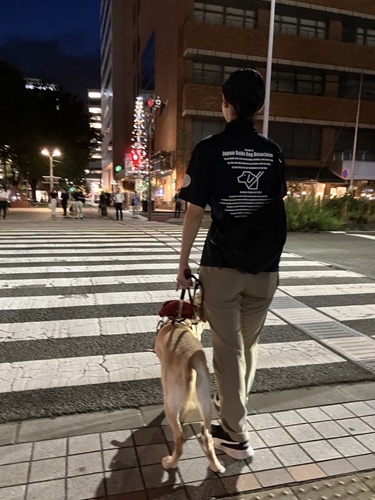
A trainer walking a dog in town after sunset.
For example, at the Sendai Training Centre, trainers work from 12:30 PM to 9:30 PM, conducting outdoor training sessions in the cooler evening hours.
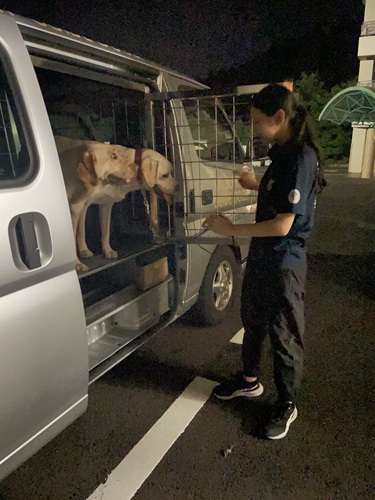
Trainer coming back from training around 9 PM and unloading the dogs from the van.

Basic training under the moonlight
In contrast, at the Kanagawa and Fujinomiya Training Centres, where temperatures remain high even at night, trainers start their day at 5:00 AM and complete outdoor training during the relatively cooler morning hours. Given Japan’s diverse climate across its regions, it is essential to tailor measures to suit local conditions.
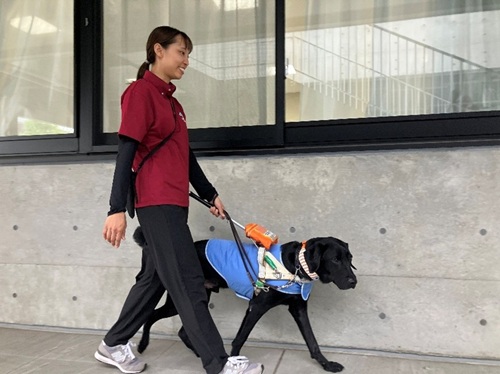
Dog wearing a blue cooling vest under the harness
Caring for the dogs is also a top priority. To prevent overheating, dogs wear "cool scarves" filled with ice packs around their necks. Additionally, they may wear cooling vests or dampened dog T-shirts to lower their body temperature through evaporative cooling. In some cases, dogs are fitted with protective boots to shield their paws from hot asphalt.
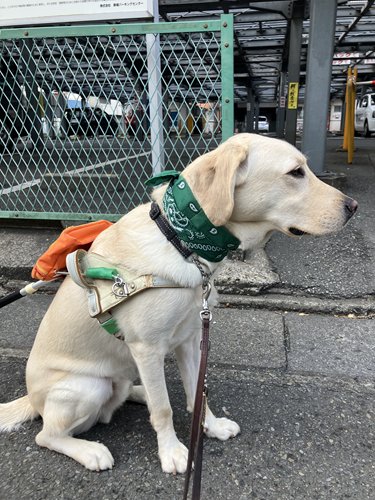
A dog wearing a cool scarf

Inside the cool scarf
However, not all measures are suitable for every dog. For instance, some dogs may find wearing boots stressful. The association works closely with users, offering consultations and training to determine the most appropriate solutions for each individual dog. Training vehicles are also equipped with multiple small fans to circulate air and prevent heat build-up while dogs are waiting.
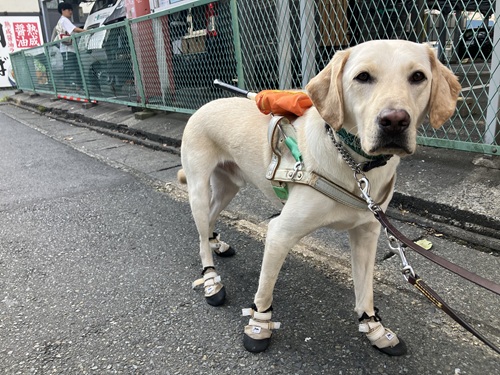
A dog being fitted with boots
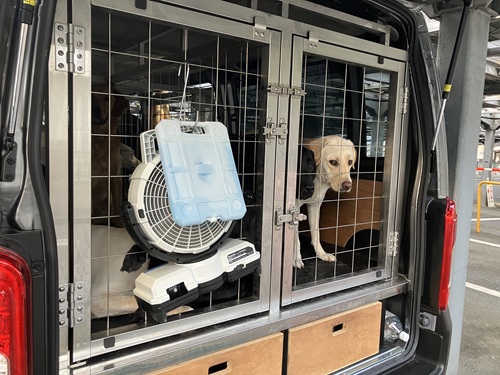
Fans installed in a training vehicle
Guidance for Users
Each June, the association sends a detailed advisory letter to approximately 200 guide dog users nationwide. This document includes practical tips such as avoiding outdoor activities on dangerously hot days and considering alternative transportation options like taxis. Users are also encouraged to choose shaded routes, take frequent breaks, and ensure both they and their dogs stay hydrated.
Since heatstroke can occur indoors as well, the advisory also provides tips for home care, such as using air conditioning or fans, placing frozen water bottles near the dog’s crate, and ensuring the crate is kept out of direct sunlight.
Just like humans, dogs need ways to protect themselves from the heat. The Japan Guide Dog Association remains committed to adapting its practices to regional climates and supporting a society where guide dogs and their users can live safely and comfortably.
For details on our policy, please visit our website (Japanese only):
https://www.moudouken.net/knowledge/heatstroke/