
Guide Dogs in Japan
Current situation of guide dogs in Japan
Approximately 700 guide dogs are active throughout Japan today.
There are 11 guide dog organizations in Japan that train about 100 guide dogs every year.

The Act on Assistance Dogs for Physically Disabled Persons
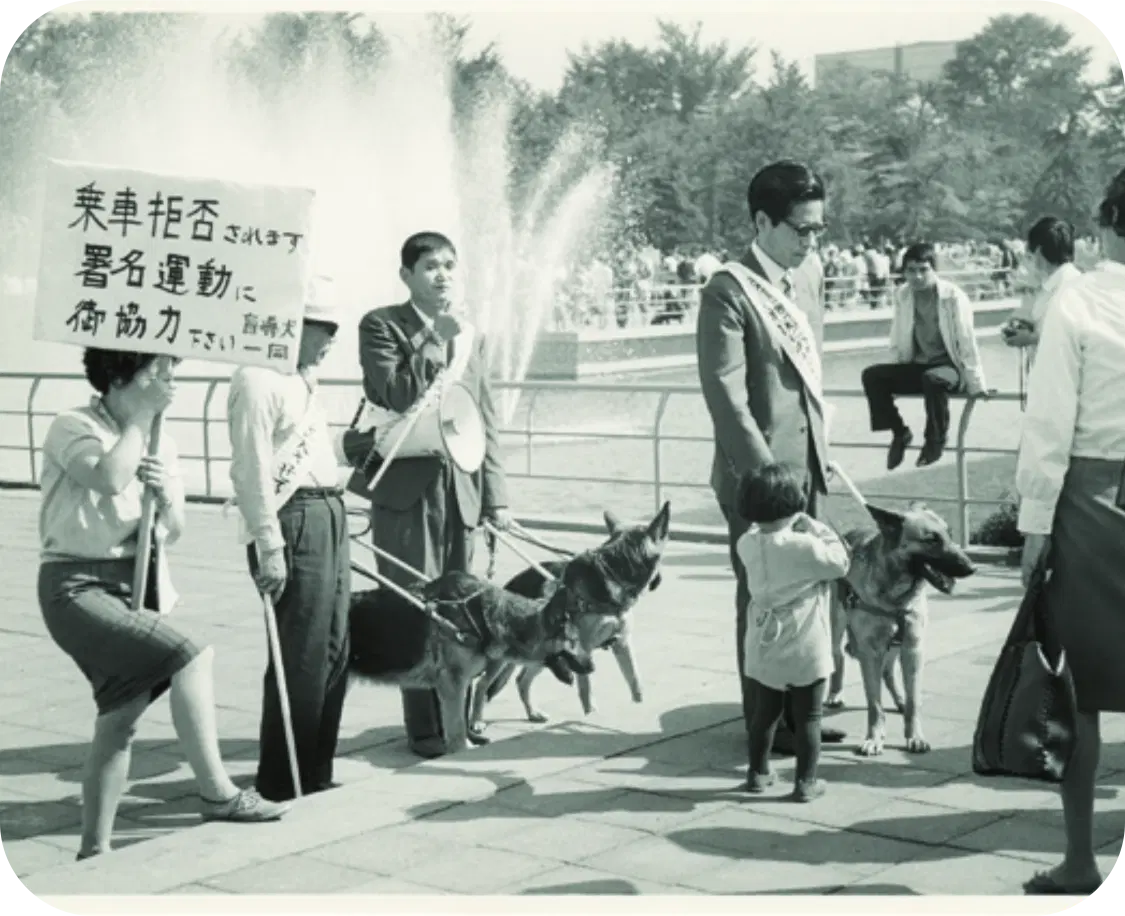
Japanese society still lacks an understanding of the acceptance of guide dogs. In many cases, guide dogs have given people with a vision impairment the freedom and confidence to go out alone; however, this independence has been undermined by stores and transportation facilities that refuse to allow guide dogs entry. To facilitate the acceptance of assistance dogs, including guide dogs, and to encourage people with physical disabilities to fully participate in society, the Act on Assistance Dogs for Physically Disabled Persons was enacted.
The Act on Assistance Dogs for Physically Disabled Persons (hereinafter called "Act on Assistance Dogs") was established in May 2002. This legislation requires public facilities, such as stores and hospitals, to accept guide dogs, mobility service dogs, and hearing dogs (collectively referred to as "Assistance dogs") that are partners of people with physical disabilities. It also requires that people with a physical disability who are accompanied by an assistance dog control their dog's behavior and sanitation and display a sign indicating that the dog is a certified assistance dog. Furthermore, assistance dog organizations are required to breed good-quality assistance dogs. Therefore, this legislation obligates facilities to accept assistance dogs, while also requiring assistance dog users and assistance dog breeding organizations to act responsibly.
The Act on Assistance Dogs for Physically Disabled Persons (hereinafter called "Act on Assistance Dogs") was established in May 2002. This legislation requires public facilities, such as stores and hospitals, to accept guide dogs, mobility service dogs, and hearing dogs (collectively referred to as "Assistance dogs") that are partners of people with physical disabilities. It also requires that people with a physical disability who are accompanied by an assistance dog control their dog's behavior and sanitation and display a sign indicating that the dog is a certified assistance dog. Furthermore, assistance dog organizations are required to breed good-quality assistance dogs. Therefore, this legislation obligates facilities to accept assistance dogs, while also requiring assistance dog users and assistance dog breeding organizations to act responsibly.

History of guide dogs in Japan
1938
First Introduction of Guide Dogs to Japan
A young American visitor, Mr. Gordon, traveled to Japan with his guide dog and gave lectures across the country. This marked the first introduction of guide dogs to Japan.
1939
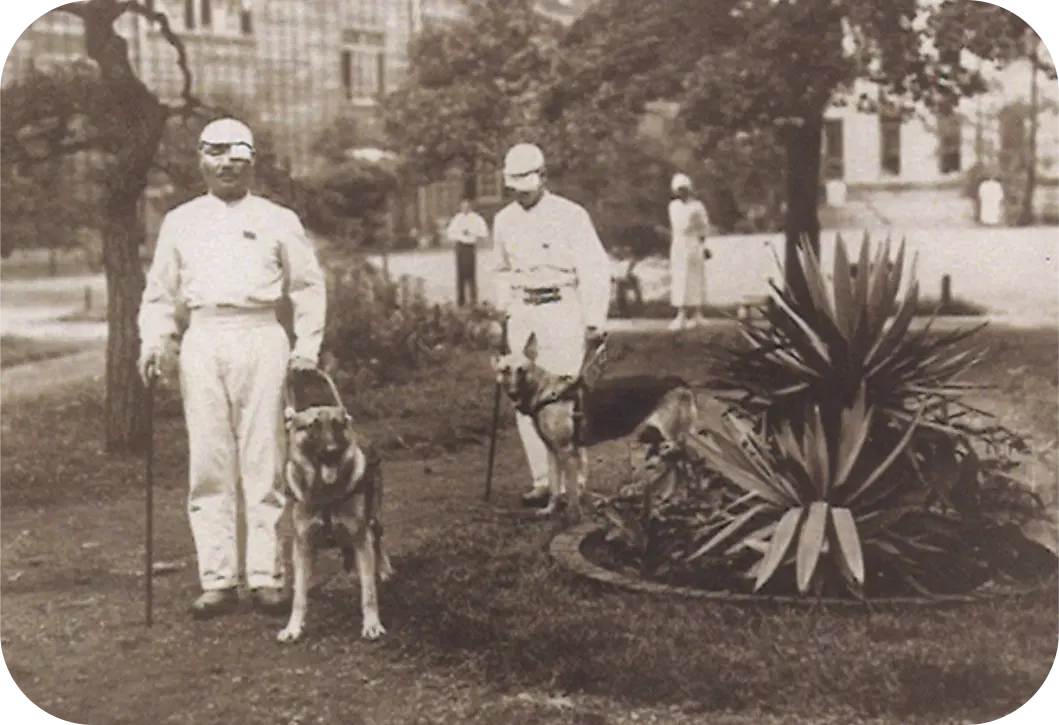
Four German Shepherds Arrive from Germany
Thanks to the efforts of Mr. Yasuo Soma, who had met with Mr. Gordon, four German Shepherds were brought from Germany to support soldiers who had lost their eyesight. These dogs became the first working guide dogs in Japan, marking the beginning of the country’s guide dog history.

1948
Start of Guide Dog Training Research in Japan
Although guide dog training had temporarily declined, Mr. Kenichi Shioya resumed efforts by beginning research into guide dog breeding and training.

1957
Japan’s First Domestically Trained Guide Dog
A German Shepherd owned by Mr. Kiyoshi Kawai was trained by Mr. Shioya and became “Champy,” Japan’s first domestically trained guide dog.
1967
Japan Guide Dog Association (JGDA) was established.
1969
Guide Dogs Allowed on the Shinkansen (Trial)
Guide dogs were experimentally permitted on the Hikari Shinkansen for the first time in Japan.
1971
Tokyo Guide Dog Association, which is now The Eye Mate, Inc., was established.
Nippon Lighthouse Welfare Center for the Blind set up its Guide Dog Training Center.
1972
Sapporo Guide Dogs for the Blind Association, which is now Hokkaido Guide Dogs for the Blind Association, was established
1973
The Service Standards for Passengers, which was issued by the Japanese National Railways, allowed visually impaired people accompanied by their guide dogs on the train.
1974
Tochigi Guide Dog Center, which is now East Japan Guide Dog Association, was established.
1975
The Chubu Guide Dogs Association of Japan was established.
1978
With the Road Traffic Act revised, guide dogs were legally acknowledged. A notification from the Ministry of Transport allowed visually impaired people with their guide dogs on buses and in taxis.
1981
A notification from the Ministry of Welfare requested of hotels and restaurants that visually impaired people with their guide dogs be allowed in.
1983
Kansai Guide Dogs for the Blind Association was established. Fukuoka Guide Dog Association, which is now Kyushu Guide Dog Association, was established.
1990
Hyogo-ken Guide Dogs for the Blind Association, which is now Hyogo Guide Dogs for the Blind Association, was established.
1991
A notification from the Ministry of Transport requested of hotels that visually impaired people with their guide dogs be allowed in.
1995
The National Federation of All Japan Guide Dog Training Institutions was established as a joint organization of all the guide dog raising facilities in Japan.
1998
The Ministry of Welfare notified medical facilities of receiving patients or visitors accompanied by their guide dogs.
1999
Nippon Foundation conducted nationwide research on awareness of guide dogs among vision-impaired people, guide dog users, and organizations that raise guide dogs.
2002
Act on Assistance Dogs Enacted
The Act on Assistance Dogs for Persons with Physical Disabilities was established.
With full enforcement in 2003, both public and private facilities became legally required to accept assistance dogs, including guide dogs.
2013
Act on Eliminating Discrimination Enacted
The Act for Eliminating Discrimination against Persons with Disabilities was established.
2016
Act on Eliminating Discrimination Enforced
The law came into effect, prohibiting unfair discrimination based on disability and requiring reasonable accommodation.
Refusing entry to people accompanied by guide dogs is considered discrimination.This marked an important step toward a more inclusive society where people are not separated based on disability.