
News
Behind the Scenes: The Vital Role of Kennel Volunteers
At the Sendai Training Center, a dedicated team of “kennel volunteers” helps support the daily care of our dogs. Currently, around 10 volunteers generously give their time to assist with a wide range of essential tasks that help keep the kennels running smoothly. Providing a comfortable and healthy environment for the dogs in our care depends on the steady completion of many important daily routines. Kennel volunteers play a crucial role in making this possible.
Their main responsibilities include cleaning living areas, preparing meals for the dogs in our care, and grooming and bathing them. Keeping the dog quarters clean, preparing daily meals, and keeping the dogs’ coats and bodies clean and well-groomed are essential for supporting the dogs’ healthy lives. By carrying out these tasks with care and attention, they help ensure that every dog enjoys a safe, clean, and comfortable life at the training center.
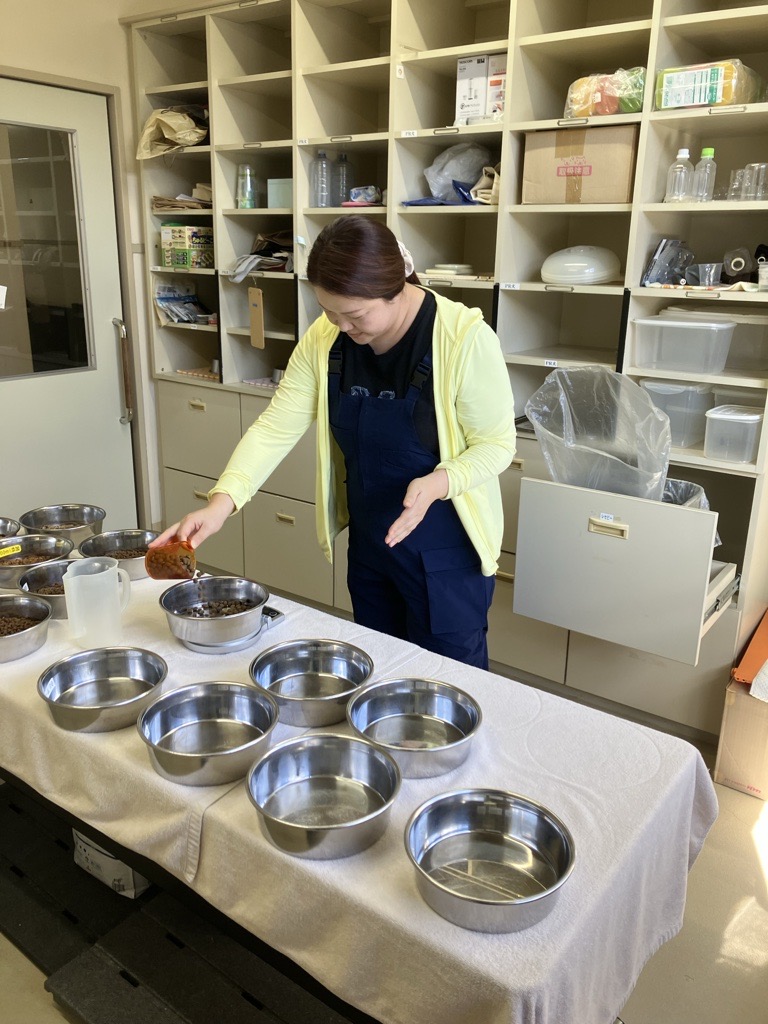
A kennel volunteer preparing meals for the dogs at the training center
The kennel is also a place filled with warmth and companionship. As volunteers work alongside staff, conversations often turn to their own pets, local recommendations on bakeries, or everyday happenings. This friendly atmosphere not only makes volunteering enjoyable, but also helps create a calm and ensuring environment for the dogs.
When people think of volunteer involvement in guide dog work, they often think of dog-raising volunteers, such as puppy walkers. However, the wellbeing of our dogs are on many forms of support behind the scenes. The contribution of kennel volunteers is invaluable. Their ongoing assistance benefits both the dogs and our staff and plays an essential part in the association's mission.
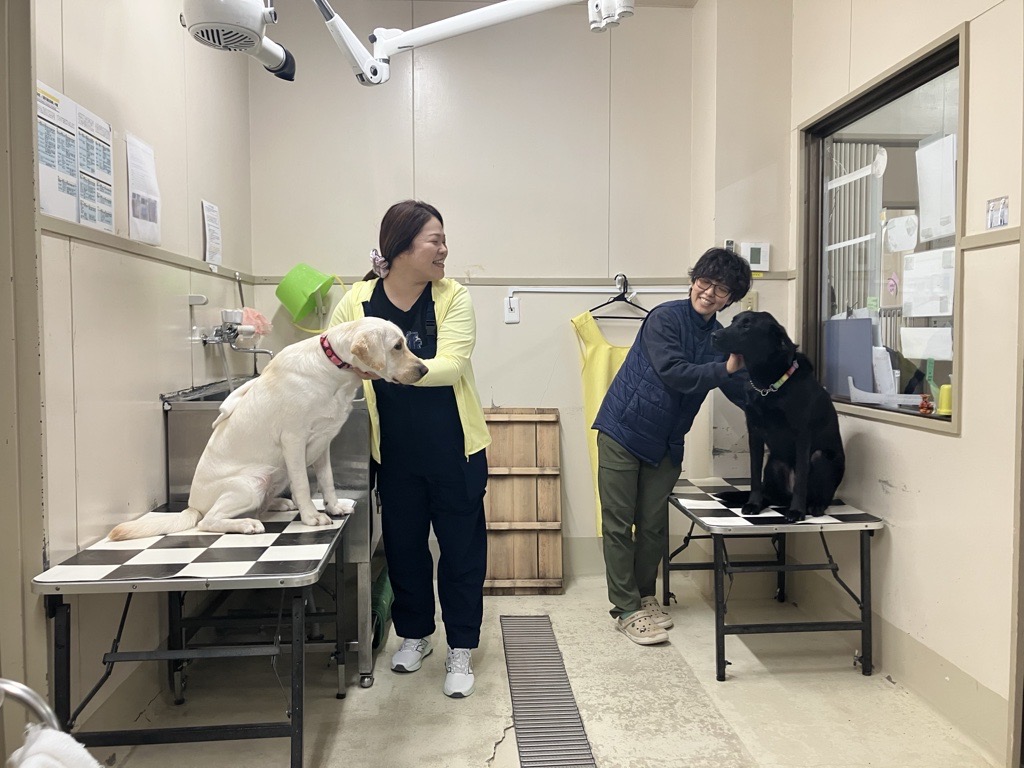
Kennel staff and a volunteer working together to care for the dogs
Furthermore, kennel volunteers also make an important contribution to the training process itself. Their interactions with dogs provide a valuable opportunity to observe and evaluate how training dogs react and behave toward people outside their usual circle of handlers and staff. For example, trainers can assess a dog's reactions when volunteers enter the kennel area or during grooming and bathing sessions. Some dogs may become nervous, bark, or display behaviors that they do not normally show with trainers. These responses offer valuable insights into each dog's temperament, confidence, and social adaptability, helping us better understand and support their development.
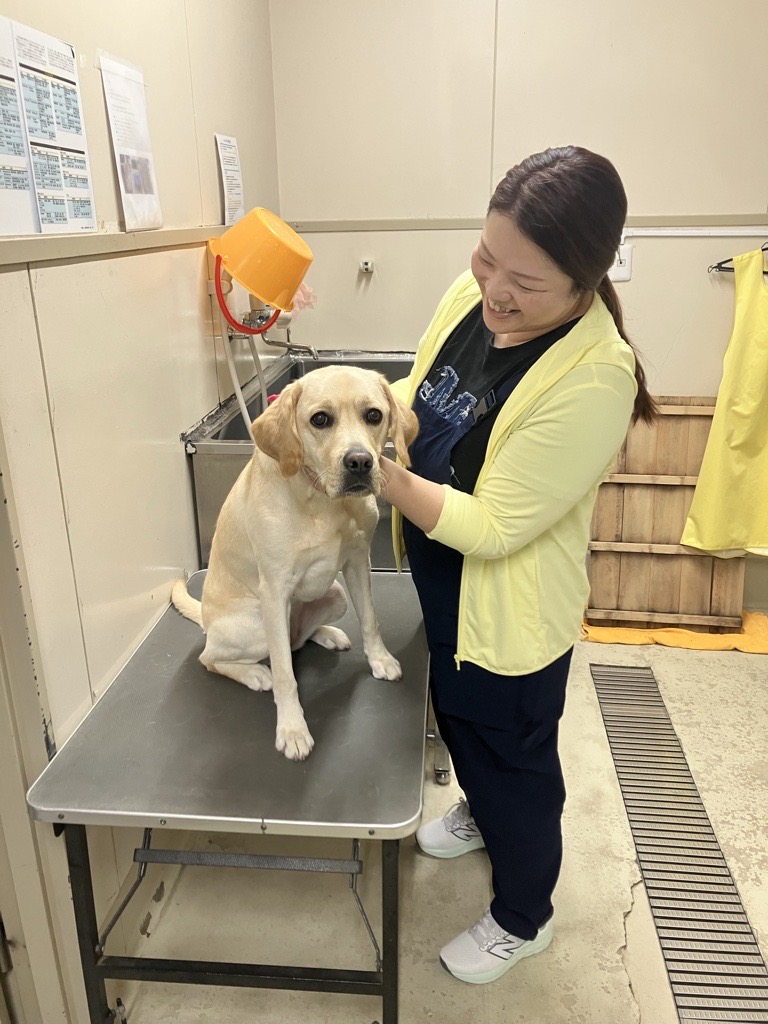
A training dog receives grooming from a kennel volunteer
We are deeply grateful to all of our kennel volunteers for their dedication and commitment. Their behind-the-scenes efforts make a meaningful difference every day, helping to ensure the wellbeing of our dogs and the success of our guide dog programs.